
How To Use Public Transportation in Budapest: A Complete Guide for Visitors
Even for an experienced public transportation user (me!) it can still be intimidating to figure out a new transit system in a foreign place in a different language, and when the whole system is in Hungarian, you may be tempted to skip it altogether and rely on cabs. But here’s the thing: Budapest’s public transportation, operated by BKK, is not only clean, safe, efficient, and extremely affordable, but also surprisingly easy to use once you get the hang of it.
That’s where this guide comes in. It’s designed to take the guesswork out of the process so you can navigate the city like a local—whether you’re hopping on a tram along the Danube, taking the metro to Heroes’ Square, or catching the bus up to Buda Castle. So, save yourself the stress (and your wallet the pain) and learn how to navigate Budapest’s excellent public transport system like a local with this thorough guide.
Just so you know: Some links on this page are affiliate links, which means I might earn a small commission if you book or buy through them, at no extra cost to you. It helps keep the coffee flowing and the stories coming, so thanks for your support! Privacy Policy | Full Disclosure
Overview of Public Transportation in Budapest
Budapest’s public transportation system includes three main types of transit that you’ll likely rely on as a visitor: trams, buses, and the metro.
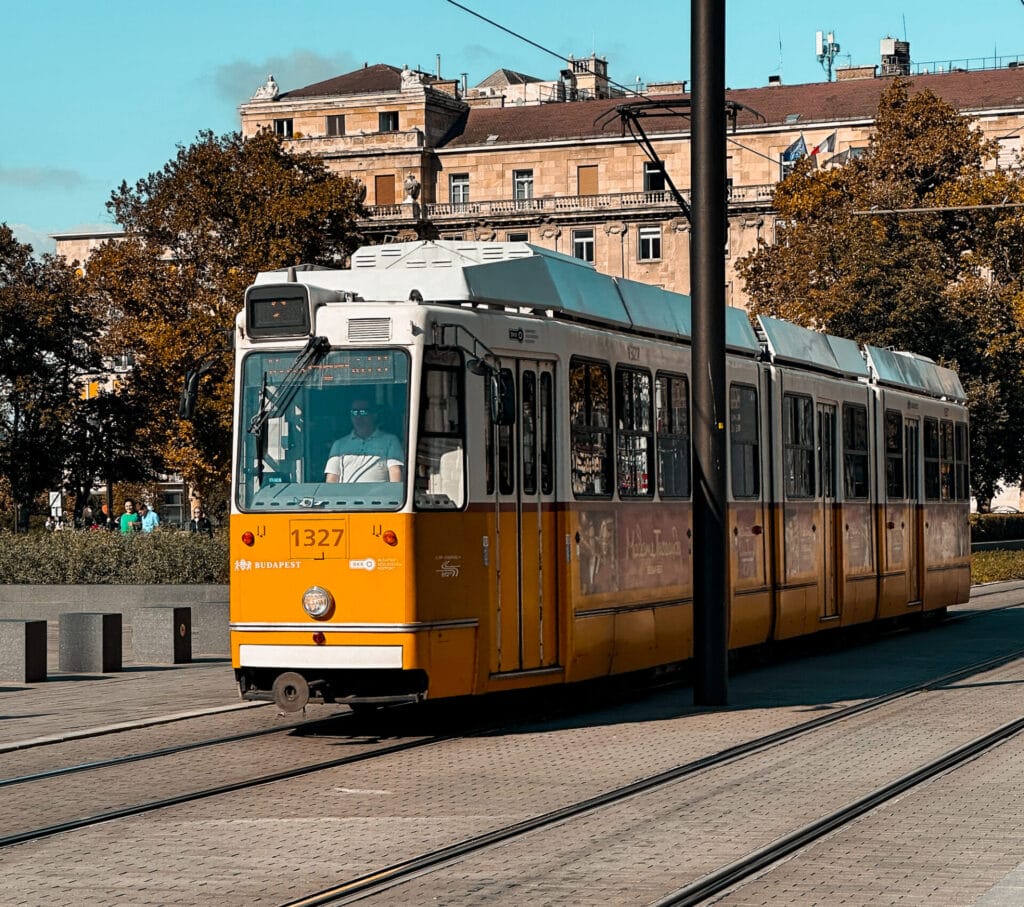
The trams are the city’s iconic yellow carriages that glide along scenic routes, including Tram 2, which runs alongside the Danube with picture-perfect views of Parliament and Buda Castle.
Buses cover the hilly neighborhoods of Buda and areas that trams and metros don’t reach, such as the 16 bus, which conveniently takes you up the hill to Buda Castle. Meanwhile, the metro’s four lines (M1, M2, M3, and M4) connect major hubs like Heroes’ Square, the Great Market Hall, and the heart of downtown Pest. Between these three, you’ll have no trouble reaching nearly every corner of the city.
Unlike in many U.S. systems with turnstiles, Budapest’s transit network operates on an honor system. There are no barriers to swipe a card or scan a ticket; instead, you’re expected to validate your ticket at the designated machines before you board. Inspectors do random checks on vehicles and at station exits, and since you never know when or where they’ll appear, it’s best to always have a validated ticket or travel pass.
Ticket validation, especially the multiple validations with timed tickets, is one of the quirks that makes Budapest’s system different than ones you might have encountered in other cities (and also where visitors can get tripped up and end up getting fined), so I’ve covered that in detail in its own section below.
Budapest Public Transportation Ticket Types and Prices
Prices are as of November 2024.
Single Tickets: For Short, One-Way Trips
Valid for a single, uninterrupted journey on any bus, tram, trolleybus, or metro line within Budapest’s city limits. However, no transfers are allowed between different vehicles or lines (except the Metro going the same direction), meaning you can’t use a single ticket to ride both the bus and tram to get to your destination; you would need two separate tickets. Single tickets are valid for 80 minutes after validation.
- Single Ticket: 450 HUF
- Block of 10 Tickets: 4,000 HUF
Single tickets can be convenient for short trips, but they require constant validation and are less cost-effective for visitors planning to use public transport frequently. Based on my own experience, I don’t recommend them for visitors to the city.
Time-Based Single Tickets: Short Term Travel with Transfers
With this ticket, you can transfer between modes of transit within the time window, though you still have to validate the ticket for each different mode of transportation.
- 30-Minute Ticket: 530 HUF
- 90-Minute Ticket: 750 HUF


Airport Shuttle Bus Single Ticket
2,200 HUF. Required for the 100E airport express bus. Note that this is a specialized ticket and not covered by other standard passes or single tickets. You can also use your contactless credit card to tap to pay on board, so you don’t actually need to purchase a separate ticket.
You can find everything you need to know about taking the 100E airport express bus from the Budapest airport to the city center in my post about the best ways to get from the Budapest airport to town.
Travelcards: Unlimited Travel for One or More Days
Travelcards are the best option for tourists. They allow unlimited travel on all modes of public transport within Budapest (including the metro, trams, buses, and certain HÉV lines within city limits). Transfers are permitted, and the best part is that they don’t require validation after the initial purchase, so you can avoid all the validation quirks and pitfalls of the single and timed tickets.
- 24-Hour Travelcard: 2,500 HUF
- 24-Hour Group Travelcard: 5,000 HUF – Valid for up to five people traveling together for 24 hours. This is especially economical for families or groups of friends, but remember that everyone must travel together.
- 72-Hour Travelcard: 5,500 HUF – Three days of unlimited travel, making it ideal for weekend visitors. At under 2,000 HUF per day, it’s one of the best-value options for short trips.
- 7-Day Travelcard: 6,500 HUF – Good for longer stays, giving you seven days of unlimited travel. Note that this card requires you to write your ID number on it and carry that ID with you for ticket inspections, while the shorter travelcards do not require this.
PRO TIP: I would highly recommend a travelcard versus single tickets even for a short visit to Budapest because they’re cost-effective, convenient, and don’t require constant validation.
Also, while electronic travelcards on the BudapestGO app are very convenient, keep in mind that if your phone dies you could end up with a fine. You might want to consider a paper travelcard if you’re constantly using your phone for navigation (me!) because that will drain your battery quickly.
Planning a Trip to Budapest?
Book early to get the best deals! Here are my top recommendations:
Fantastic Experiences & Tours:
Top Rated Hotels in Budapest:
Budapest Public Transportation Maps
Click HERE to access the official BKK map of daytime public transportation in Budapest.
Click HERE to access the official BKK map of nighttime public transportation in Budapest.
Click HERE to access a handy BKK map of public transportation in the city center.
How to Buy Tickets and Passes
Ticket Vending Machines
Budapest’s Ticket Vending Machines are scattered around metro stations and transit hubs. They’re multilingual, user-friendly, and available 24/7.
- Payment: ticket vending machines accept cash (coins and smaller bills) and contactless cards. If you’re paying cash, avoid larger bills like 10,000 HUF unless your total is high, these machines give change in coins.
- Multiple Tickets: ticket vending machines let you buy multiple tickets or passes in one go, with a transaction limit of 250,000 HUF. Convenient for families or groups.

Mobile Tickets with BudapestGO
Budapest has a well-designed and user-friendly public transportation app in English called BudapestGO that lets you purchase tickets and validate tickets by scanning a QR code or via NFC (more on that below).
Click here to download BudapestGO for Android
Click here to download BudapestGO for iPhone
Even if you aren’t planning to purchase electronic tickets, I would still recommend downloading the BudapestGO app for your trip. It has a handy trip planner feature that works quite well and real time updates regarding service. For a small fee, BudapestGO also connects with the MOL Bubi bike-sharing system.
Tap to Pay
On the 100E airport express bus and Metro Line 1, you can use your credit card as your ticket. Just tap to pay at the Budapest Pay&GO device by the entrance, and your credit card becomes your ticket. For all other metro lines, you’ll need a separate ticket.
Validating Tickets
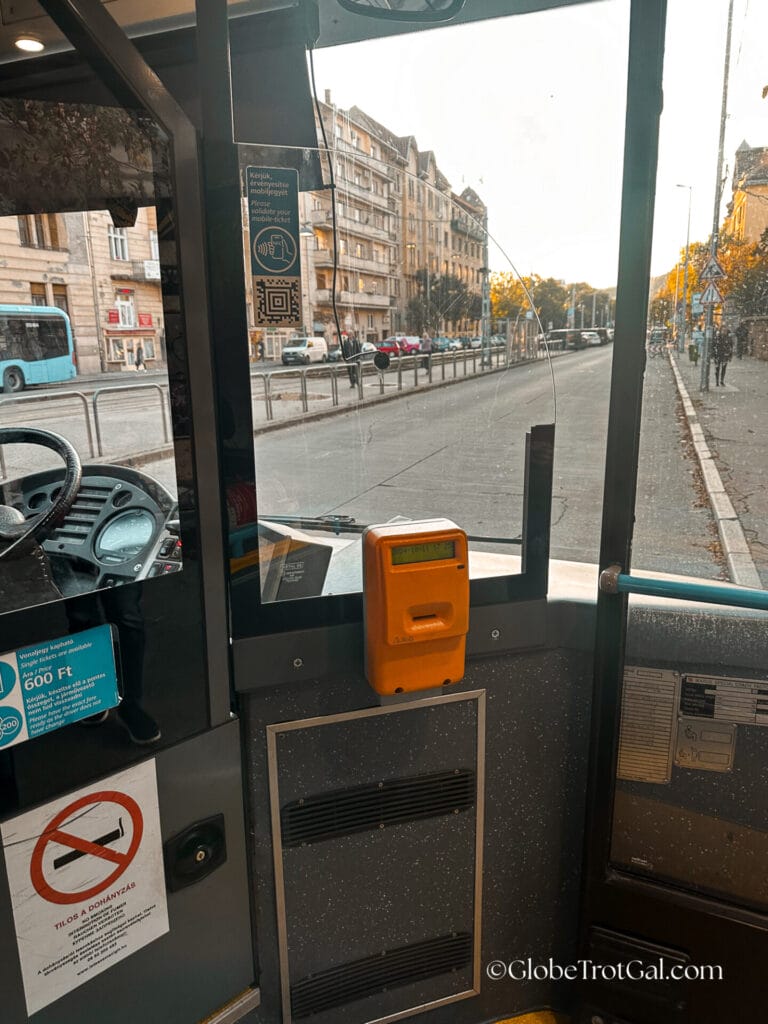

Ok, here’s where those quirks I mentioned come into play. Honestly, I found the validation rules around tickets confusing (granted I did not have access to a thorough guide like this one before I visited), and that’s why I say the travelcard is the way to go. But if you do go the single ticket or timed ticket route, here’s everything you need to know about validation.
Single paper tickets have a number grid on one end. You insert this end into the validation machine. There are manual red validators where you insert the ticket into the top and pull the black part toward you to physically punch the ticket. More commonly, you’ll see yellow and orange electronic validators where you just stick the ticket in the front.
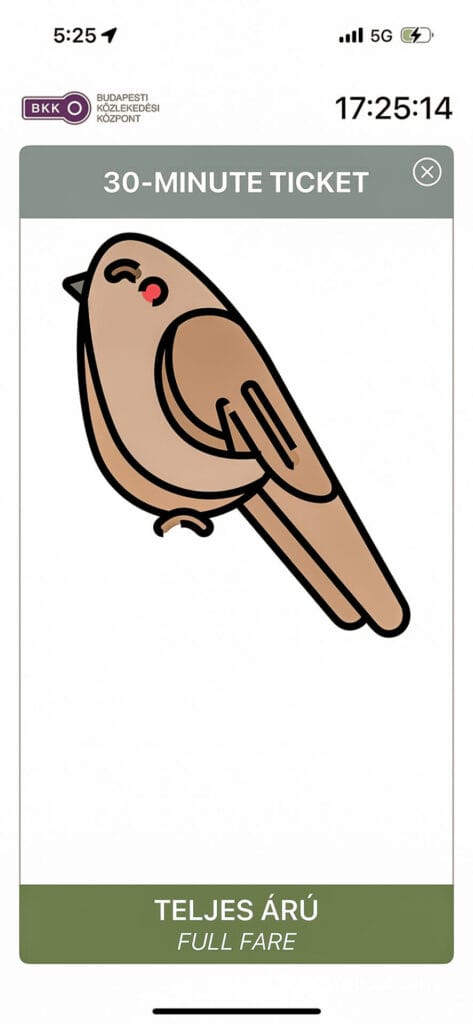
For electronic tickets, you go into the BudapestGO app, find your purchased ticket, click “validate,” and the camera will open. You scan the QR code, which is just outside the door on trams and buses (also inside the door on buses, but easier to just scan the one on the exterior). Once the ticket is validated, an animated image will appear. If a ticket inspector comes along, you hit the “present code to inspector” button and a QR code will appear for them to scan.
For the metro, the QR codes are on posts at the metro entrance (they’re hard to miss). You can also use NFC to validate if your phone supports NFC by using the BudapestGO widget. The NFC is located in the same spot as the QR codes. Personally, I had difficulty getting NFC validation to work even though my iPhone does support NFC, so scanning the QR code was easiest. Also note that having to load the app, ticket, and validate does use up a lot of battery if you’re doing it often.
Note that if you are using a timed ticket, you have to validate the ticket again when you change transportation types. So, if you take the bus to a tram, you’ll need to validate it once on the bus and again on the tram.
Also, you can’t wait to validate until the ticket inspector shows up. You’ll get fined for that too.


How to Plan a Route on Budapest Public Transportation
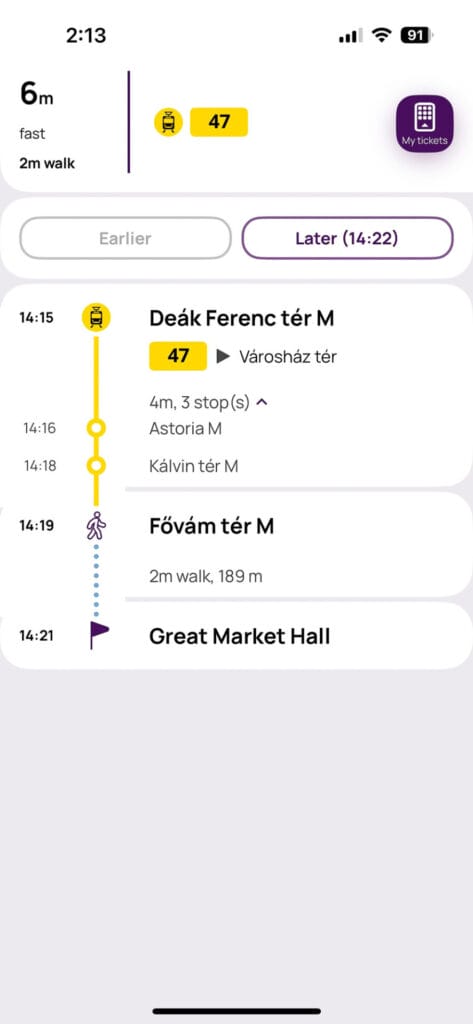
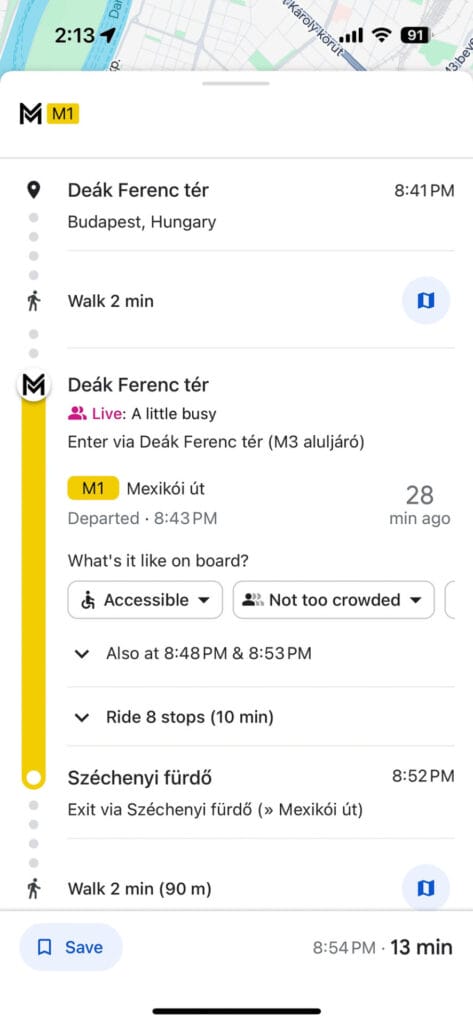
Use the trip planner in the BudapestGO app or Google Maps. The BudapestGO app has an excellent trip planner and gives real-time updates. Google Maps also works very well for routes using Budapest public transportation.
Want to save this post for later?
For anyone who doesn’t use public transportation on a regular basis: To determine which bus or train to board, you’ll need to figure out the ultimate destination of the bus, train, or tram you need. Google Maps or the BudapestGO app will tell you this when it shows your route. Some screenshots of both options are below:
How to Avoid Fines
Inspectors in Budapest are vigilant, assertive, and known to pursue fines internationally through collection agencies. Here are common mistakes tourists make and how to avoid them:
- Single Ticket Validation: If you’re using single tickets, validate them immediately upon entering the vehicle or metro station. Missing this step can lead to fines.
- ID with Travelcards: With the 7-Day Travelcard, make sure you carry the ID matching the number on your card. Forgetting it could mean a fine.
- Entering Stations Without a Valid Ticket: If you pass the ticket validation machines in the metro without a validated ticket or travelcard, you’re at risk for a fine—even if you plan to validate on board.
Fines are STEEP! The full fine is 25,000 HUF (about $65 USD), though it is reduced to 12,000 HUF (about $31 USD) if you pay on the spot by bank card. If you believe you were fined in error (e.g., you have an electronic pass but your phone died so you can’t access it), you can present your pass within two days at the BKK central office for a significantly reduced fee (though that would be a terrible way to spend precious vacation time!).
The Budapest Metro
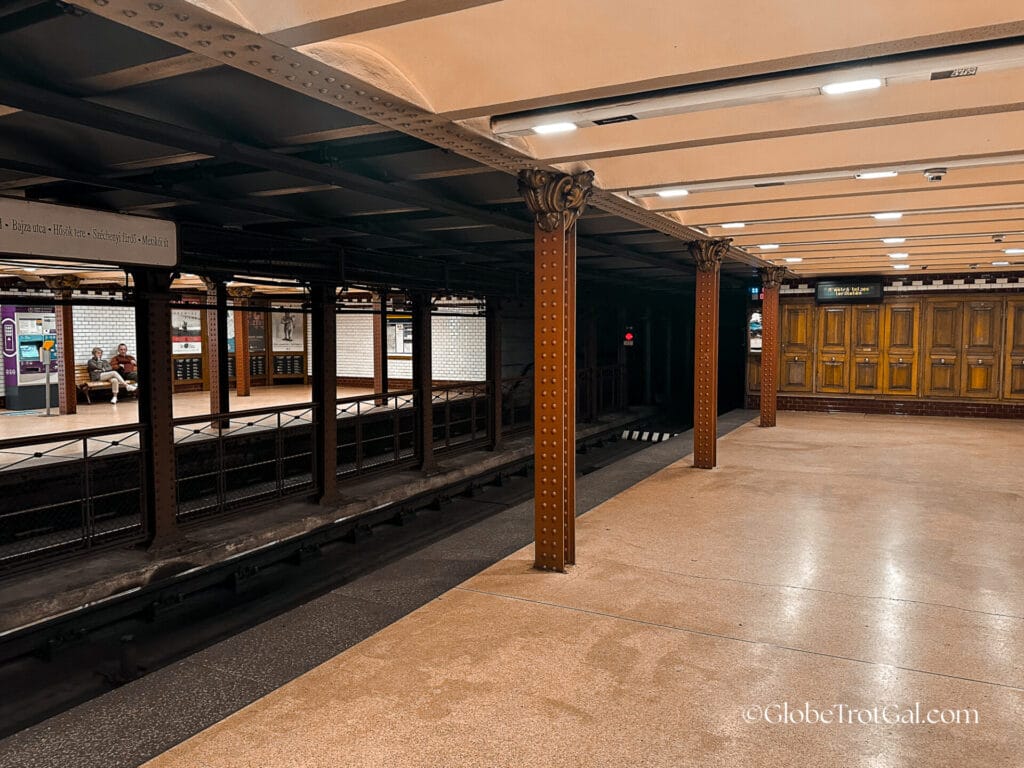
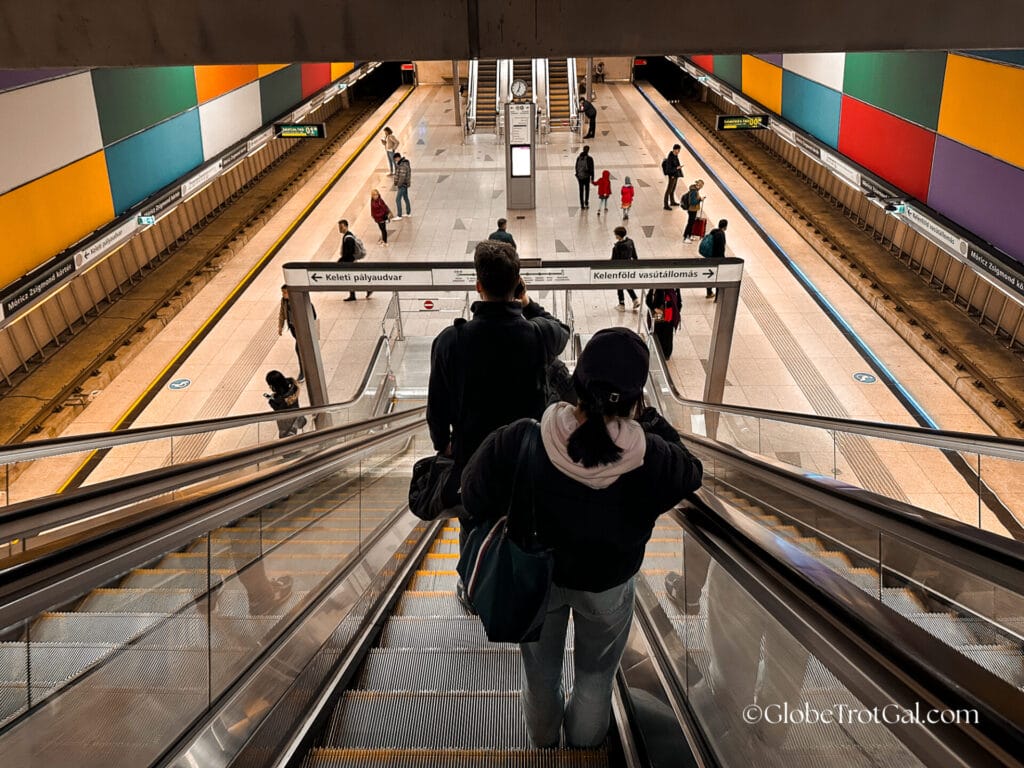
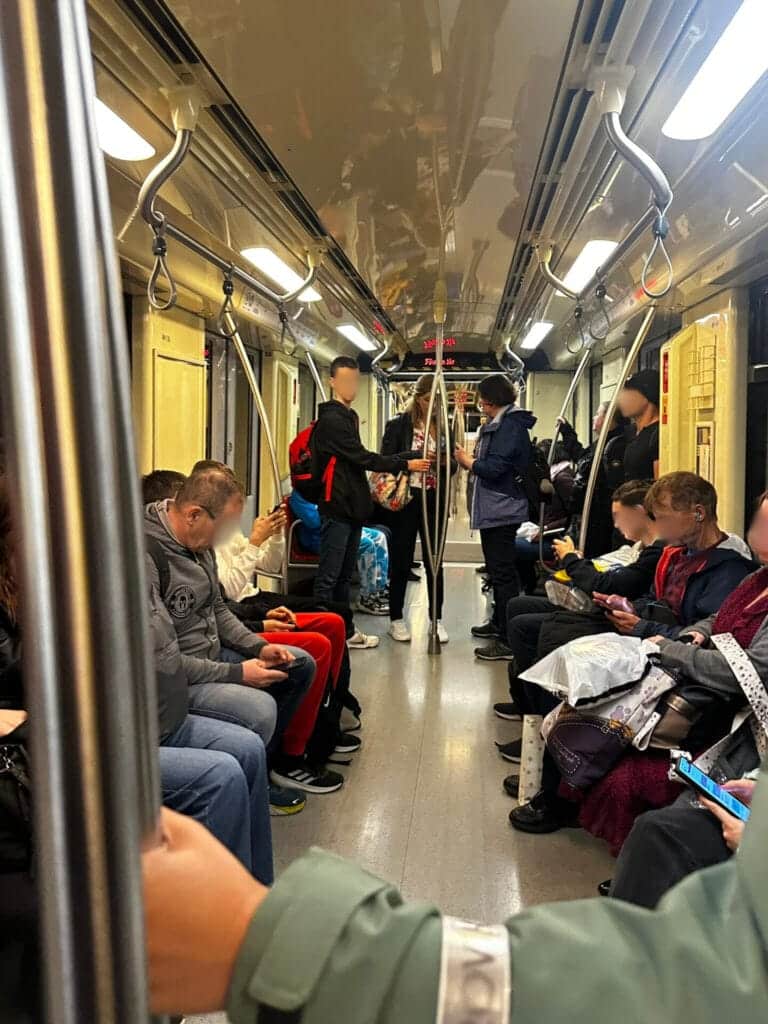
Budapest’s metro system may be compact, but it’s a convenient way to get across the city quickly.
Metro Lines Overview
- M1 (Yellow Line): The historic M1, running under Andrássy Avenue, is Europe’s oldest underground and connects key spots like Heroes’ Square and the Opera House. Note that line 1 is the only metro line where you can tap to pay and use your credit card as a ticket.
- M2 (Red Line): This line spans Buda to Pest.
- M3 (Blue Line): Running north to south, M3 connects major hubs.
- M4 (Green Line): The city’s newest line, connecting major train stations, this line is a smooth ride with a modern feel.
Metro service runs from 4:30 AM to 11:30 PM, with frequent trains. At night, you’ll need to rely on night buses or Tram 6.
How to Ride the Budapest Metro
- Validate Your Ticket: Validation machines, QR codes, and NFC sensors are at the metro entrances.
- Board the Train: Signage is plentiful and easy to follow in the metro. For most lines, both directions board from the same central platform. For Metro Line 1, you’ll need to be sure you access the platform on the correct side.
- Switching Lines: Transfers are free on the metro, even with a single ticket, but avoid reentering a platform area once you exit; a new ticket would be needed for that.
PRO TIP: while the metro (and the trams and the buses) have automated announcements at each station, unless you speak Hungarian it’s quite difficult to understand them. For the metro, it’s easy to count stops so you know when to get off. For buses and trams that is more difficult to do, so I relied heavily on Google Maps to keep track of where I was along the route to my destination on buses and trams so I didn’t miss my stop.
Budapest Trams
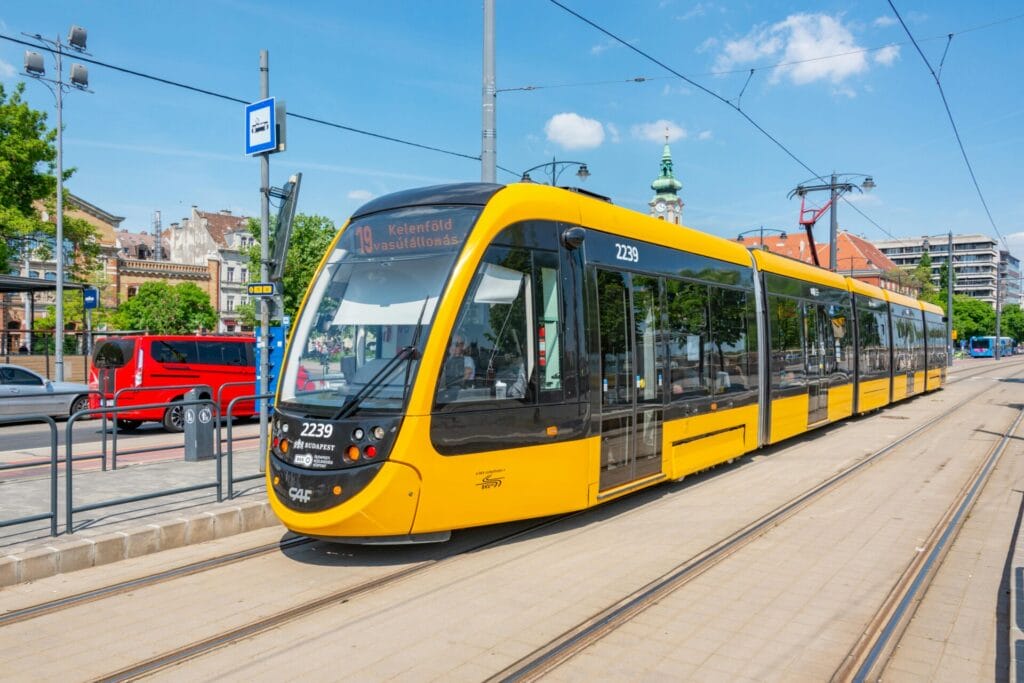

Key Tram Lines
- Tram 2: Known as one of the world’s most scenic tram rides, it travels along the Danube’s Pest side with stunning views of Parliament, Buda Castle, and the Chain Bridge.
- Trams 4 and 6: These are the city’s busiest, and Tram 6 is the only 24-hour tram, running along the Grand Boulevard. They’re useful for tourists because they run on a circular route around the city.
How to Ride the Budapest Tram
- Validate Your Ticket: Validate electronic tickets before boarding using the QR code just outside the door; validate paper tickets in the machine on board (it will be right inside the entrance door).
- Board Through Any Door: You can board the tram through any door; no need to board at the front.
- Getting Off: Press the “stop” button as your destination nears. Depending on the tram type, those might be located on poles or on the door itself.
- Transfers: With a single ticket, you cannot transfer to another tram line; you must use a new ticket. With a timed ticket or a travelcard, transfers are permitted.
Budapest Buses and Trolleybuses
Budapest’s blue buses are more extensive than its trams or metro, covering areas they don’t reach.

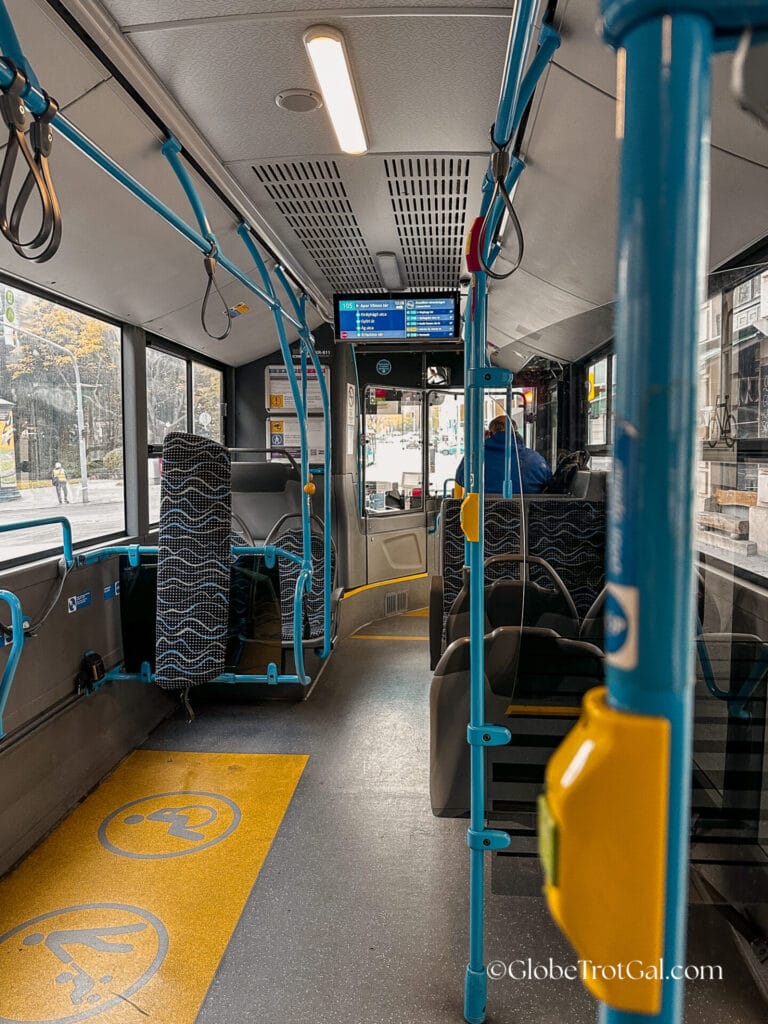
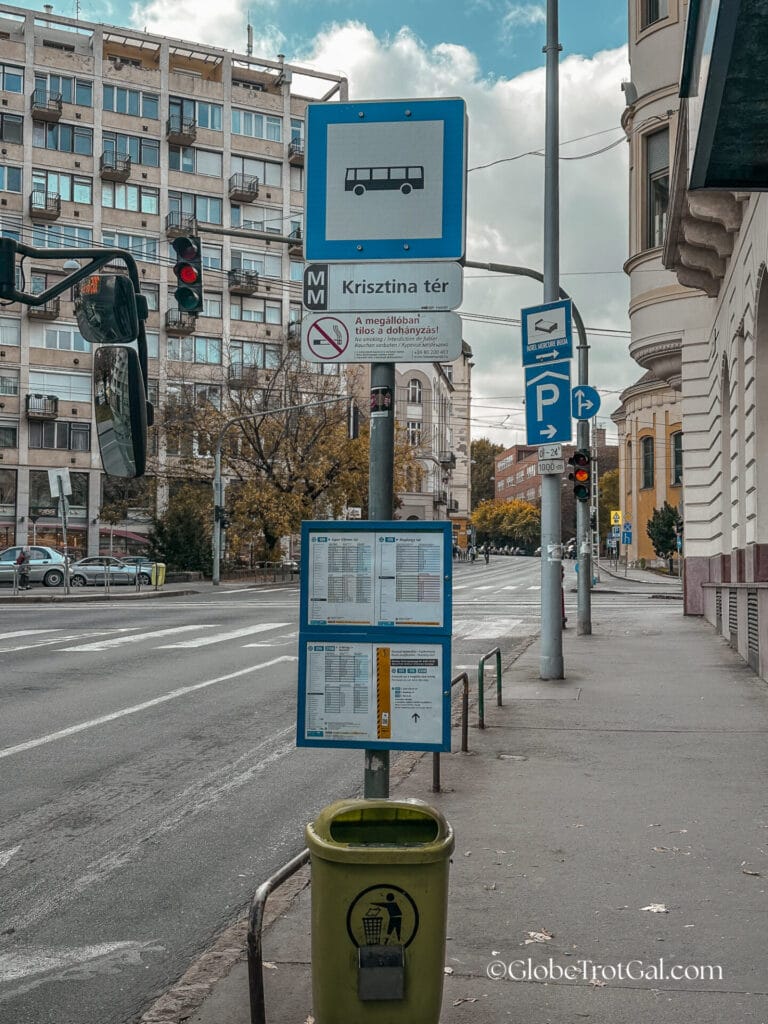
Key Bus Routes
- Route 16: Goes from Deák Ferenc tér in the center of Pest up the hill in Buda and drops you off right at Matthias Church and Fisherman’s Bastion.
- 100E Airport Shuttle: This direct airport bus has a dedicated ticket (2,200 HUF) and travels to Deák Ferenc Square in central Pest.
- Night Buses (900s): These replace the metro after hours. Buses and Tram 6 are available all night.
How to Ride the Bus and Trolleybus in Budapest
- Enter at the Front (in theory): According to BKK, most bus lines require front door boarding. However, in practice, people often board through any open door, and the driver rarely checks tickets. Just make sure to have a valid ticket before boarding.
- Press the Stop Button: Like on the tram, signal the driver by pressing the button when your stop is near. The stop buttons will be located on poles throughout the bus.
- Use the App for Night Routes: BudapestGO is very useful for finding night buses, which follow slightly different routes than day services.
Trolleybuses (buses with the electric lines overhead) run mainly in Pest. Board and validate tickets the same way as on buses.
Public Transit Accessibility in Budapest
Buses: most buses in Budapest are “low floor” buses and have dedicated wheelchair areas.
Trams: Trams are a mixed bag. Some trams are newer and modern and the doors open directly onto the platform; others are vintage (Tram 2, for example) and have steep steps to board.
Metro: Line 4 is completely accessible with elevators at every station. The other lines are mostly not accessible with the exception of new stations on Line 3 and a handful of stations on Line 2.
If accessibility is a concern for you, best to check on the BKK website or through the BudapestGO app to determine if a certain tram line, bus route, or station is accessible.
Budapest’s public transportation system is efficient, clean, safe, affordable, and a fantastic way to explore the city’s many sights. Pair it with the BudapestGO app or Google Maps for seamless navigation, and you’re all set to experience the city like a pro.
Have a favorite tram route or an insider transit tip for Budapest? Drop a comment below to share your recommendations or ask any questions. I’d love to help you make the most of your time in this incredible city!
Top Budapest Hotel Deals & Must-Do Budapest Activities
Search hotels across Budapest, find the best-rated Budapest tours, and support this blog (at no extra cost to you)…all in one spot!