
A Complete Guide to the Deutschland Ticket for Tourists
If you’re planning a trip to Germany and intend to move around even a little using trains, the Deutschland Ticket can make your life dramatically easier (and cheaper). You may also hear it called the Deutschland Pass, or D-Ticket. Same thing.
My brother and I used the D-Ticket extensively for two weeks last fall while traveling through Munich, Füssen, Nürnberg, Berlin, and several smaller towns in between. We used it for subways, suburban trains, trams, regional trains between cities, and multiple day trips.
Based on the routes we took, we saved at least €400 each compared to buying individual tickets, probably more. For example, the round trip train from Munich to Füssen (Neuschwanstein) alone would have cost us €60 each so just that one round trip covered the cost.
But honestly, the biggest benefit wasn’t even the money. It was not having to think about tickets constantly.
No buying separate subway passes. No calculating whether a day trip was worth another €40. Just figure out what train you want to take and hop on. Got up late and missed the train you planned for? No big deal, just hop on the next one.
If you’ve never taken a train in Germany before, or you’re nervous about navigating public transportation in another language, this guide will walk you through exactly how it works and why you should definitely consider getting a Deutschland Ticket for your trip to Germany.

Just so you know: Some links on this page are affiliate links, which means I might earn a small commission if you book or buy through them, at no extra cost to you. It helps keep the coffee flowing and the stories coming, so thanks for your support! Privacy Policy | Full Disclosure
What Is the Deutschland Ticket?
The Deutschland Ticket is a monthly German transportation pass that allows unlimited travel on regional and local transportation throughout all of Germany. As of February 2026, it costs €63.
The Deutschland Ticket includes all of these types of transportation:
- Regional trains (RE and RB)
- S-Bahn (suburban overground trains)
- U-Bahn (subways/metros)
- Trams
- Public buses
- Some ferries
The D-Ticket does not include:
- ICE (InterCity Express high-speed trains)
- IC or EC long-distance trains
- FlixTrain
- Private long-distance rail operators (not DB)
In simple terms: it covers almost everything you would realistically use as a tourist, except the fast, long-distance trains between major cities.
(Confused about all the train acronyms? Keep reading. I’ll explain exactly what those mean and how to tell which trains your ticket covers.)
The Deutschland Ticket is Digital
The Deutschland Ticket is not a paper ticket. It’s digital. When you purchase it, it lives inside an app as a QR code (most commonly in the DB Navigator app or a regional transit app). When a conductor or inspector asks for your ticket, you open the app and show the code. There’s no printing. No mailing. No physical pass.
The Deutschland Pass is Valid for a Calendar Month, Not 30 Days
This is a VERY important aspect of the D-Ticket to pay attention to. The ticket is valid for a calendar month, not 30 days from the date you purchase it.
For example: if you buy a Deutschland Ticket for October, it’s valid from October 1 through October 31. If you arrive in Germany on October 20 and buy it then, it’s still only valid through October 31, you don’t get 30 days from the day you purchase it.
The D-Ticket is Technically a Subscription
The Deutschland Ticket is structured as a monthly subscription. It automatically renews unless you cancel it. Most providers require cancellation by the 10th of the month to prevent renewal for the following month. For example, if you purchase it for October and don’t cancel by October 10, you may be charged for November.
That sounds intimidating, but in practice it’s manageable. You can:
- Purchase one month and then cancel before the deadline.
- Or buy through a provider that automatically cancels after the first month (which is what we did to avoid thinking about it mid-trip). More on that later.
Where Can Tourists Can Buy the Deutschland Ticket?
There are several ways to purchase the Deutschland Ticket and the ticket is the same no matter where you buy it. (The one place you won’t be able to buy it with a foreign credit card is directly from DB, but several other options exist for tourists.)
Note: you can buy the pass for a month in advance. In other words, you don’t have to wait until October 1 to purchase a pass for October. You can buy it beforehand and you’ll just specify you want the pass for October during checkout.
1. TicketPlus+
TicketPlus+ is one of the easiest options for tourists to purchase the Deutschland Ticket and offers easy cancellation options. You can pay with credit card or Paypal.
You’ll get an email confirmation after purchase and it’s simple to load the pass directly into your phone wallet.
2. MVV App (Munich Transport Authority)
Website: https://www.mvv-muenchen.de
The MVV app is also an option international travelers because it accepts foreign credit cards and has a straightforward cancellation process. Even though it’s Munich’s regional transit app, the Deutschland Ticket you purchase through MVV is valid nationwide on all covered regional and local transportation.
Wherever you buy your ticket, just be sure to log in and cancel your subscription before the monthly deadline (usually the 10th).
Want to save this post for later?
A Quick Guide to German Train Types for Tourists
When you start looking at train schedules in Germany, you’ll see a lot of capital letters. It can look overwhelming at first, but you really only need to understand a few of them.
Train Types NOT Included in The D-Ticket
ICE (InterCity Express)
These are Germany’s high-speed trains. They connect major cities quickly and are sleek, comfortable, and fast. They are not included with the Deutschland Ticket. If you want to take one, you’ll need to buy a separate ticket.
IC / EC
These are long-distance trains that are slower than ICE but still connect major cities. They are also not included.
Train Types That ARE Included in the D-Ticket
RE (Regional-Express)
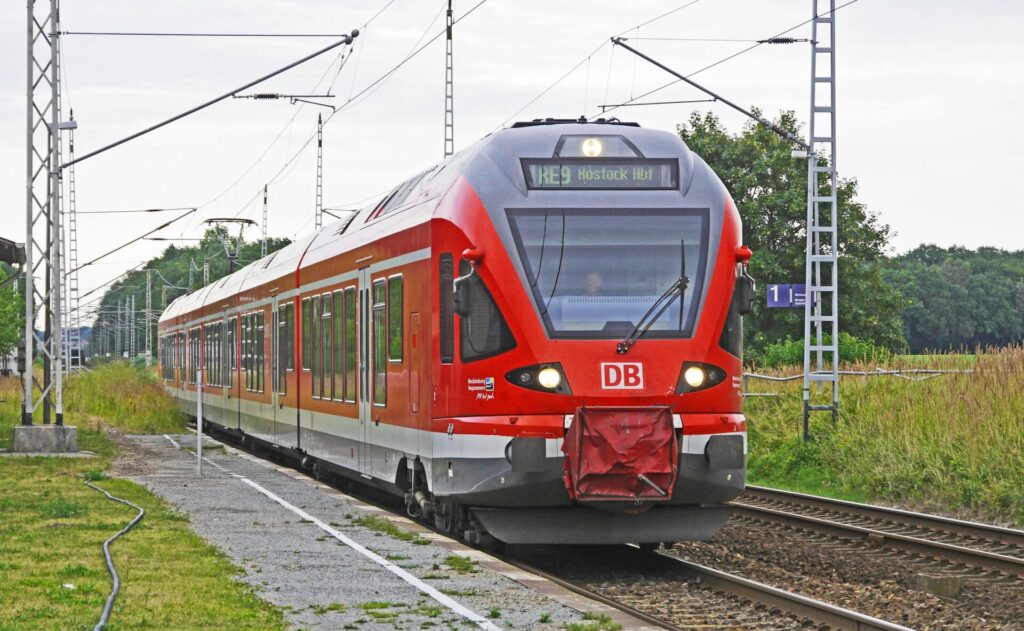
These are faster regional trains that connect cities and larger towns. They make fewer stops than RB trains and are commonly used for day trips and travel between nearby cities. The Deutschland Ticket covers these.
RB (Regionalbahn)
These are slower regional trains that stop more frequently. Second class seats are covered by the Deutschland Ticket.
S-Bahn
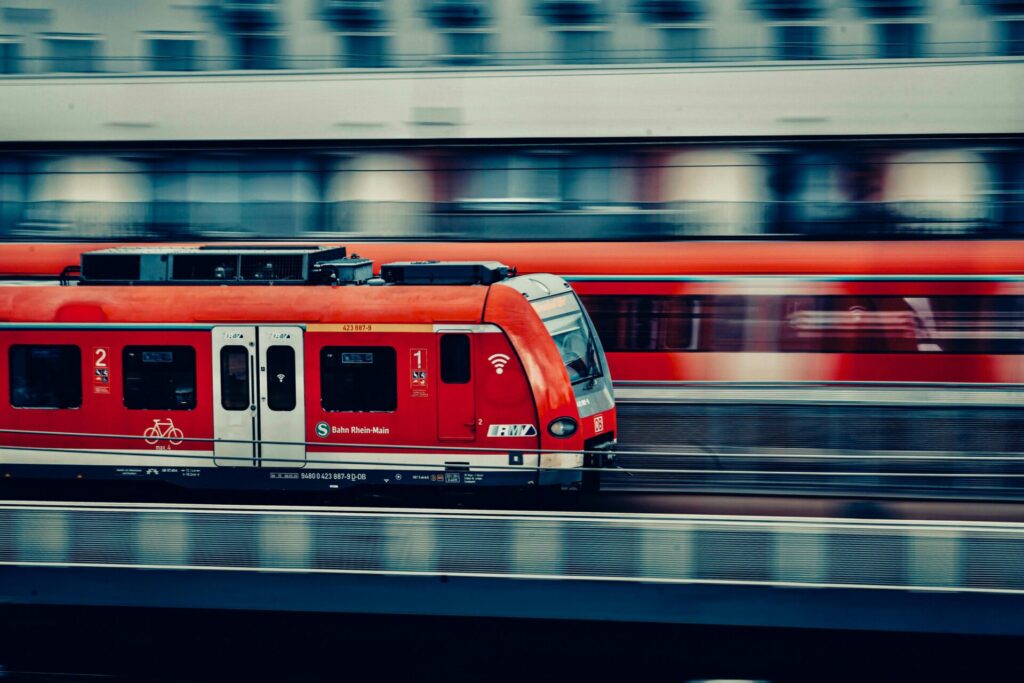
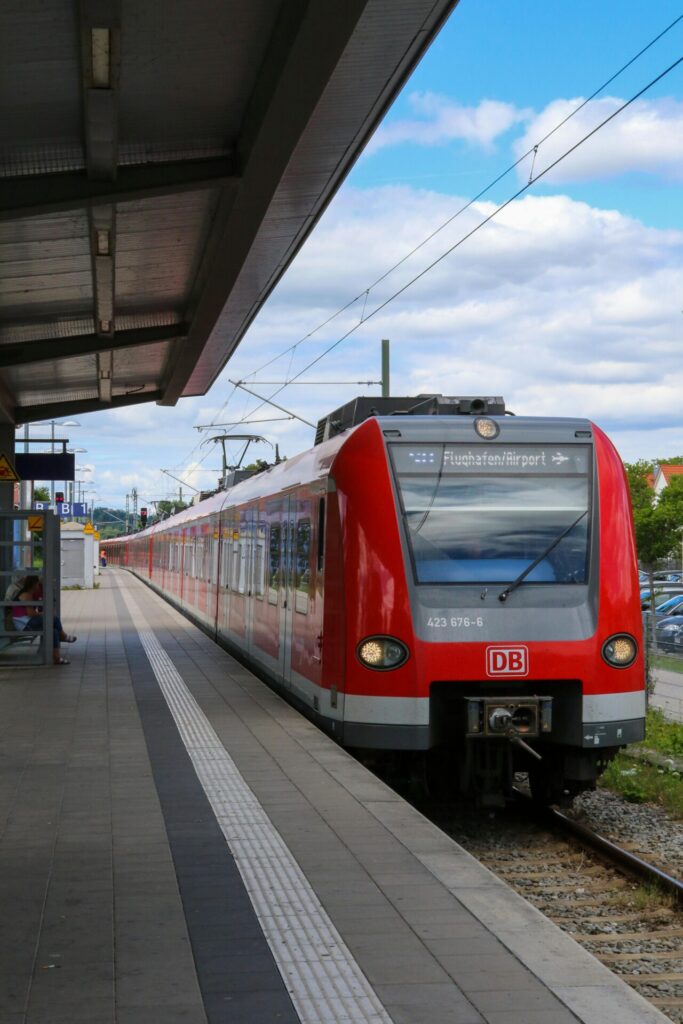
These operate within metro areas and surrounding suburbs. Think of them as suburban above ground rail systems. If you’re staying in a major city like Munich or Berlin, you will likely use the S-Bahn to get to and from outer neighborhoods or the airport (on eligible routes). S-Bahn is included in the Deutschland Ticket.
U-Bahn
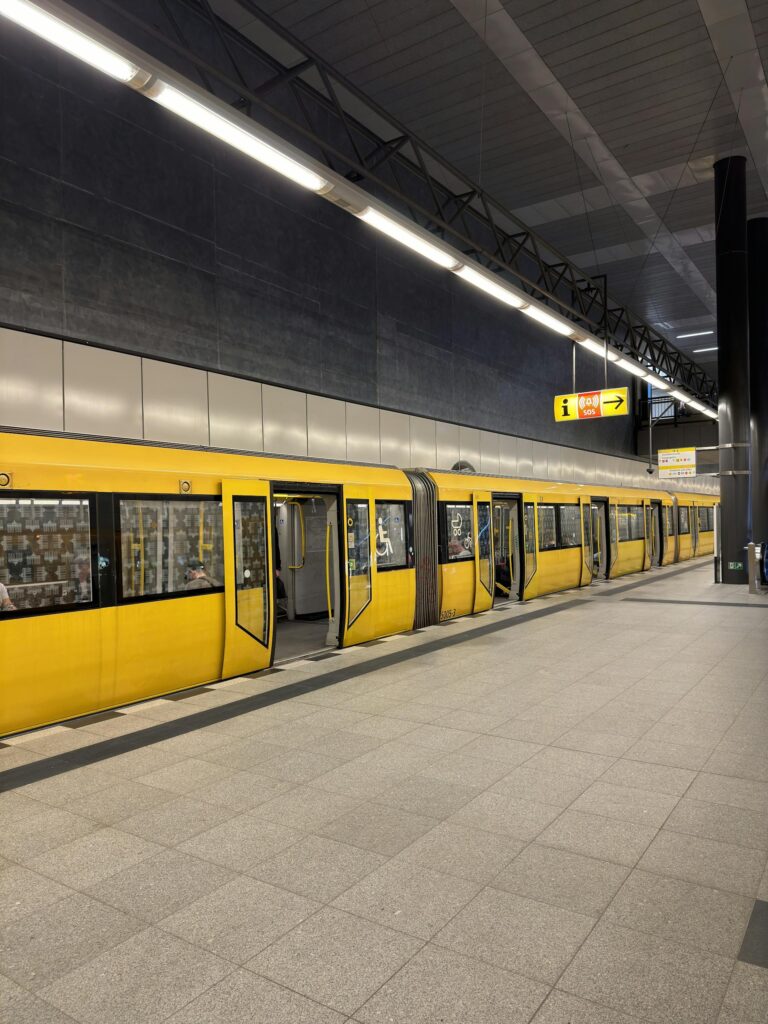
This is the subway or metro within a city. If you’ve used the Subway in NYC, the Tube in London or the Metro in Paris, this is the equivalent. U-Bahn is included in the D-Ticket.
In short: RE, RB, S-Bahn, and U-Bahn are covered. ICE, IC, and EC are not. But the good news is you don’t have to memorize that, the DB Navigator app (which is surprisingly great) will figure out which trains are included for you. More on that in a minute

How to use the Deutschland Ticket on Public Transportation (U-Bahn, S-Bahn, Trams, Buses)
Unlike public transport in some countries, public transportation in Germany, like the U-Bahn (subway), S-Bahn (suburban trains), does not have entry gates. You just walk into the station or board the tram or bus and take a seat. You don’t scan a pass when you board like you would in NYC or Paris.
Instead, ticket inspectors conduct random spot checks. They may be in uniform or plain clothes. If they check your carriage, they will ask to see your ticket. With the Deutschland Ticket, your pass lives in an app as a QR code. If asked, you open the app and show the code.
Important note: Because the ticket is personal and non-transferable, you are technically required to carry official ID to prove it belongs to you. I was never asked for ID, but the rule exists and fines are real if you cannot verify your identity. A passport works, and many travelers can now store a passport or (in some U.S. states) a driver’s license in their phone’s digital wallet, which makes this easier.
How to use the Deutschland Ticket on Regional Trains (RE and RB)
Regional trains connect cities and towns. These are labeled RE (Regional-Express) or RB (Regionalbahn), and they are fully covered by the Deutschland Ticket.
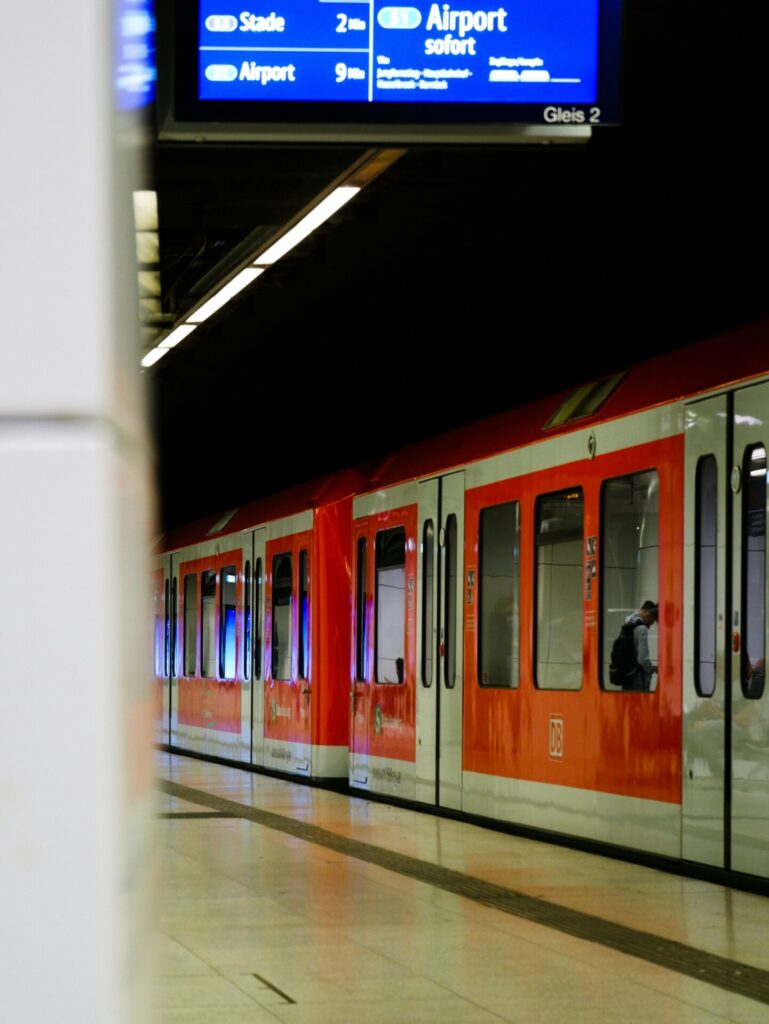
At the station, you’ll look at the large digital departure board to find your train’s platform (called “Gleis”). The DB Navigator app will also show the train number, departure time, and platform so you can match everything up.
When the train arrives, you board and find an open seat. There are no seat assignments . After departure, a conductor will usually walk through the train and scan everyone’s ticket. This is when you show the QR code in your app. Again, no scanning before boarding. You simply get on and show your ticket if asked.
A Quick Note on First vs. Second Class
The Deutschland Ticket is valid for second class only on regional trains (RE and RB). Regional trains usually have a small first-class section, clearly marked on the outside of the carriage and above the seats. If you sit there without upgrading, you can be fined.
You can technically pay extra to upgrade, but on regional trains it’s rarely worth it. The seats are typically the same, the layout is nearly identical, and there are no meaningful perks. First class may be slightly less crowded, but it may also be full. On regional routes, second class is comfortable and perfectly fine for tourists, even if you’re lugging suitcases around.
Using the DB Navigator App for the D-Ticket
If you download one thing before your trip, make it the DB Navigator app. It’s Deutsche Bahn’s official train app, it works in English, and it makes using the Deutschland Ticket dramatically simpler. You can find it in app stores on Android and Apple.
Even if you don’t buy your ticket directly through Deutsche Bahn (which you can’t unless you have a German bank account), the app is incredibly helpful for planning routes on regional rail. Here’s why:
First, when you search for a route, there’s a Deutschland Ticket filter toggle. Turn that on. The app will automatically remove trains that are not covered by your pass, including ICE, IC, and EC trains.
This is huge.
It means you don’t have to memorize every train acronym or worry about accidentally boarding a high-speed train that isn’t included. If the filter is on, the app only shows trains your pass covers.
Second, the app shows you everything you need in one place: departure time, arrival time, total travel duration, transfer stations (if any), and the platform number. If there’s a delay or a platform change, it updates in real time.
Third, you can also save itineraries inside the app. That way, when you’re at the station, you’re not searching from scratch. You simply open your saved trip and confirm the platform, and the app will alert you to schedule changes or platform changes for saved trips.
For nervous first-time train travelers, this removes almost all of the uncertainty.