
1 Day Budapest Itinerary For Solo Travelers
Let’s start with a truth: one solo travel day in Budapest is not enough time to see all this city has to offer. Ideally, you’d have two or three days to explore its thermal baths, quirky ruin bars, and grand streets. But if all you have is 24 hours in Budapest, don’t worry, you can still see the highlights and get a true feel for what makes the city so special.
Since time is tight in this 1 day Budapest itinerary, here’s the first big solo travel tip for Budapest: stay centrally in Pest, which is the flat part of the city on the east side of the Danube. Most hotels are on this side of the river anyway, and staying there means you’ll have quick access to major sights and transportation (and it’s generally safe for solo travelers too).
Just so you know: Some links on this page are affiliate links, which means I might earn a small commission if you book or buy through them, at no extra cost to you. It helps keep the coffee flowing and the stories coming, so thanks for your support! Privacy Policy | Full Disclosure
A Note on the Pace of This Itinerary
I’ve tried my best to thoughtfully design this itinerary. It is full, but manageable and not intended to run you ragged. We’ll start with some solid morning sightseeing and a decent amount of walking, but by the time afternoon hits, you’ll be resting your legs in thermal baths, and come evening, you’ll be unwinding on scenic river cruise (with prosecco) or relaxing at one of Budapest’s famous ruin bars with a drink in hand.
The goal here is to see the highlights without feeling like you’re racing the clock. There’s enough time built in to pause, sit, and actually enjoy what’s around you. Budapest isn’t just about checking off landmarks—it’s about enjoying the flow of the city and letting it all sink in. So yes, you’ll cover some ground, but there’s room to breathe, relax, and enjoy Budapest the way it was meant to be enjoyed.
Here are my recommendations for what to see and do in one day in Budapest (for first timers, it’s (Buda-PESHT, not PEST):
Early Morning: Sunrise at Fisherman’s Bastion & Matthias Church
Grab a Quick Coffee & Pastry to Go
Fuel up with coffee and a pastry to go. If you’re staying centrally in Pest, head to Deák Ferenc tér to pick up your morning coffee before making your way across the river to the Buda side. (“Tér” means “square” in Hungarian, and Deák Ferenc tér is easy to spot thanks to its large Ferris wheel and spacious green area in the middle of the city.)
Getting to Fisherman’s Bastion
The fastest, easiest way to reach Fisherman’s Bastion is by hopping on Bus 16 from Deák Ferenc tér, which takes you directly to the Castle District. For a more touristy alternative, you could take the Buda Castle Funicular from the base of the Chain Bridge which starts running at 8 am, though it’s a bit pricy for what it is and requires a 15-minute walk once you’re up to the top. The funicular ride itself is less than 2 minutes, so not really worth it if you only have one day in Budapest.
For the most efficient and affordable route, stick with the bus. While it’s certainly possible to walk up the hill from the river, it’s a bit of a hike to get to those epic views over the Danube—and we’re short on time.
For this itinerary, I’d recommend purchasing a 24-hour transit pass (about $7 USD) so you can hop on and hop off all public transportation and you don’t have to deal with validating individual tickets (which is a bit quirky and can be confusing). For more detailed information about how to use Budapest’s excellent public transportation system, check out my handy Guide to Budapest Public Transportation for Visitors.

Sunrise Views from Fisherman’s Bastion
If you’re an early riser, Fisherman’s Bastion is the spot to catch sunrise in Budapest. Built in 1902 with a Neo-Romanesque design that looks straight out of a fairytale, this terrace is all arches, towers, and postcard-perfect views. From here, you’ll have an unbeatable vantage point of the Danube, the Parliament Building, and the whole of Pest.
Pro Tip: The lower section of Fisherman’s Bastion is always free, and it’s honestly where you get the best views. There’s also an upper terrace, which is free before 9 am, but requires a ticket afterward. Having tried it myself, skip the ticket—it’s basically the same view you get from the free lower level, so save yourself the few extra bucks.
Step Inside Matthias Church
Right behind Fisherman’s Bastion, you’ll find Matthias Church (aka The Church of Our Lady of Buda Castle), a Gothic stunner with a colorful, tiled roof that sets it apart from any other church in Europe. Originally built in the 14th century, it’s famous for its intricately painted interior, which blends Gothic and Art Nouveau designs. A quick walk-through takes about 10-20 minutes, but it’s worth it for the frescoes and stained glass alone. Tickets are about $5 USD and can be bought on-site (or online—just check the schedule in advance to make sure it’s open on your day of travel here). The church opens to visitors at 9 am.
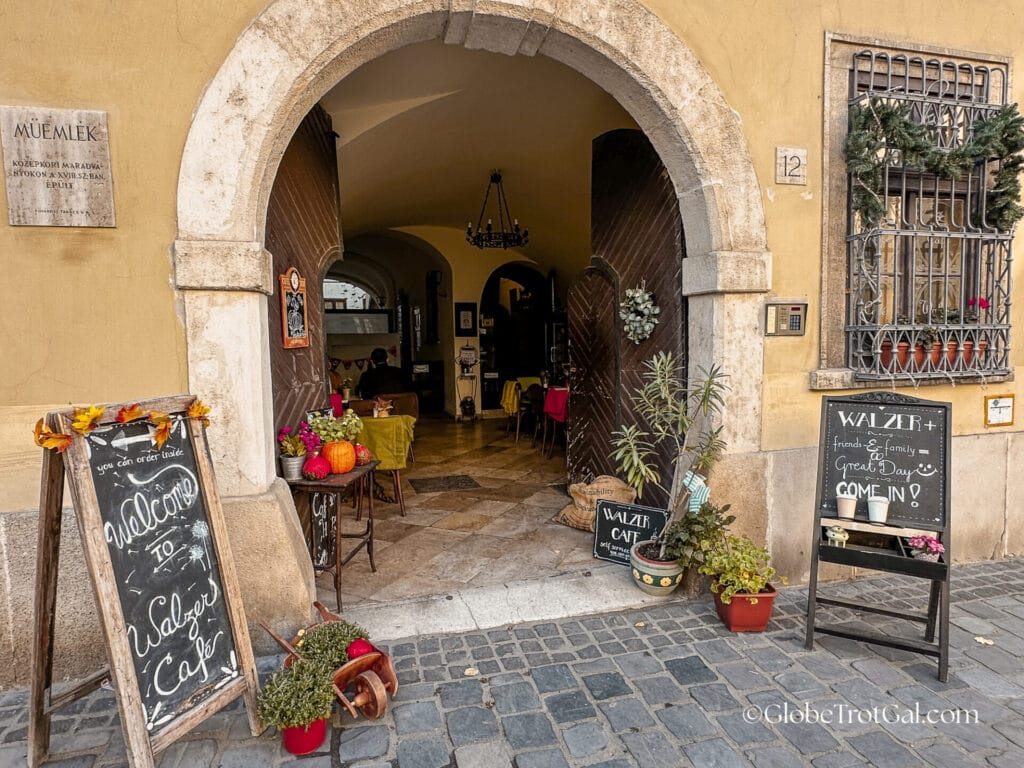
Caffeine Stop: Walzer Café
For another coffee (or just a moment away from the crowds), make a quick detour to Walzer Café, a quiet, locally operated spot just a four-minute walk from Matthias Church. It opens at 10 am daily (closed Tuesdays) and is a refreshing, authentic escape from the tourist bustle. If you’re pressed for time, there’s also a Starbucks at Fisherman’s Bastion itself—not exactly a hidden gem, but it’s a convenient option if you need another caffeine fix.

Planning a Trip to Budapest?
Book early to get the best deals! Here are my top recommendations:
Fantastic Experiences & Tours:
Top Rated Hotels in Budapest:
Late Morning: Cross the Chain Bridge & Meet the Neo-Gothic Majesty of Parliament
Walk Back to Pest Over The Chain Bridge
After using up half your cloud storage taking photos at Fisherman’s Bastion and Matthias Church, make your way down the hill toward the Széchenyi Chain Bridge. The downhill stroll takes about 12 minutes, giving you glimpses of the city unfolding below as you approach one of Budapest’s most recognizable landmarks.
The Chain Bridge, officially named after Count István Széchenyi, was completed in 1849 and was the first permanent bridge linking Buda and Pest. The “chain” in its name comes from its flat, iron support chains—think more oversized bicycle chain than traditional round links. At the time, this engineering feat was revolutionary, symbolizing a new era for Hungary and a literal connection between the city’s two halves.
Walk Along the Danube to the Parliament Building (or Take Tram 2)
Once you’ve crossed the Chain Bridge, you’re on the Pest side, with some of the best views of the Buda Castle and Fisherman’s Bastion across the river. From here, it’s about a 10-minute walk along the Danube to Kossuth Lajos tér and the Hungarian Parliament Building, so if your feet are up for it, you’ll be rewarded with some epic photo ops.
If you’re not in the mood for more walking, hop on Tram 2 and ride it one stop to the square.

Take 4,000 Pictures of the Hungarian Parliament Building
Arriving at Kossuth Lajos tér, you’ll come face-to-face with the Hungarian Parliament Building, an architectural giant that demands attention. Completed in 1902, it’s one of Europe’s largest legislative buildings, with pointed spires, a towering dome, and Gothic details that make it look more like a royal palace than a government building.
If you have extra time, guided tours are available in multiple languages and last around 45 minutes (though you probably don’t have enough time for that this time around). But just a walk around Kossuth Lajos Square gives you a great view of the building’s grandeur.
Pause at the Shoes on the Danube Memorial
From Kossuth Lajos Square, take a short walk south along the riverbank to reach the Shoes on the Danube Memorial. This moving tribute, which consists of rows of iron shoes along the river, honors Hungarian Jews who were killed on the banks of the Danube during World War II. It’s a powerful reminder of the city’s darker history and a stop that brings home the weight of Budapest’s past.

Lunchtime Stop at Central Market Hall: Street Food & Souvenirs Galore
Take Tram 2 to Central Market Hall
After the memorial, head back to Kossuth Lajos Square and hop on Tram 2 heading south to Fóvám tér station. It’s about a 10-minute ride. A block away from the station and impossible to miss is Budapest’s Central Market Hall (which you’ll also see referred to as Grand Market Hall), a lively spot that’s popular with locals and visitors alike.
Hungarian Street Food and Souvenirs at Central Market Hall
Opened in 1897, the Central Market Hall is Budapest’s largest and oldest indoor market. Head upstairs to the second level, and you’re in street-food heaven. This is the perfect place to try classic Hungarian street eats you can’t leave Budapest without tasting.
Start with a lángos—a crispy, deep-fried dough topped with sour cream, cheese, and sometimes garlic or ham if you want to try it like the locals. Then grab a chimney cake (kürtóskalács), a cinnamon-sugar pastry often served with ice cream for an extra treat. (And don’t worry—goulash is still on the agenda for later in the day, so you’re not missing out on that Hungarian classic.)
This stop doubles as a chance to shop for authentic souvenirs. On the ground floor, you’ll find all sorts of paprika in beautiful jars, great to take home as a souvenir (the paprika here is the real deal!). And on the second floor, you’ll find everything from handmade crafts to fridge magnets to Hungarian textiles. If you’re after something locally made, make sure to check labels or ask about authenticity; there are also mass-produced, made-in-China souvenirs for sale here too.
And finally, if you have a few extra minutes or just really love old markets (I do!), wander down to the market basement, where you’ll find fish stalls and every kind of pickle imaginable (Hungarians are serious about pickling). For more detail and to make the most of your visit check out my Guide to Budapest’s Central Market Hall.
Afternoon Adventures: Statues, Castles & a Soak in the Széchenyi Thermal Baths
Take the Tram and Historic M1 Metro to Heroes’ Square
After lunch at the Central Market Hall, it’s time to head over to Heroes’ Square. From Fővám tér (the square right outside Central Market Hall), catch the 47 or 49 tram heading north. With your back to the market, the trams will be coming from your right. Take either tram to Deák Ferenc tér, then transfer to the M1 metro line going in the direction of Mexikói út. Ride the M1 for seven stops until you reach Hósök tere (Heroes’ Square). The whole trip takes about 25 minutes.
The M1, also known as the Millennium Underground, is Budapest’s oldest metro line and one of the oldest in the world, dating back to 1896. This line retains much of its old-world charm, with wood-paneled stations and vintage carriages that make you feel like you’re stepping into another era.
Heroes’ Square: Hungary’s Past on Display
Arriving at Hósök tere (Heroes’ Square), you’re stepping into one of Budapest’s most important historical sites. Built to celebrate Hungary’s 1,000th anniversary, Heroes’ Square is lined with statues of national icons—from kings and generals to revolutionaries. The centerpiece is the towering Millennium Monument, topped with a statue of the Archangel Gabriel. On either side of the square, you’ll find the Museum of Fine Arts and the Hall of Art, two of Budapest’s main cultural institutions.
Stroll Over to Vajdahunyad Castle
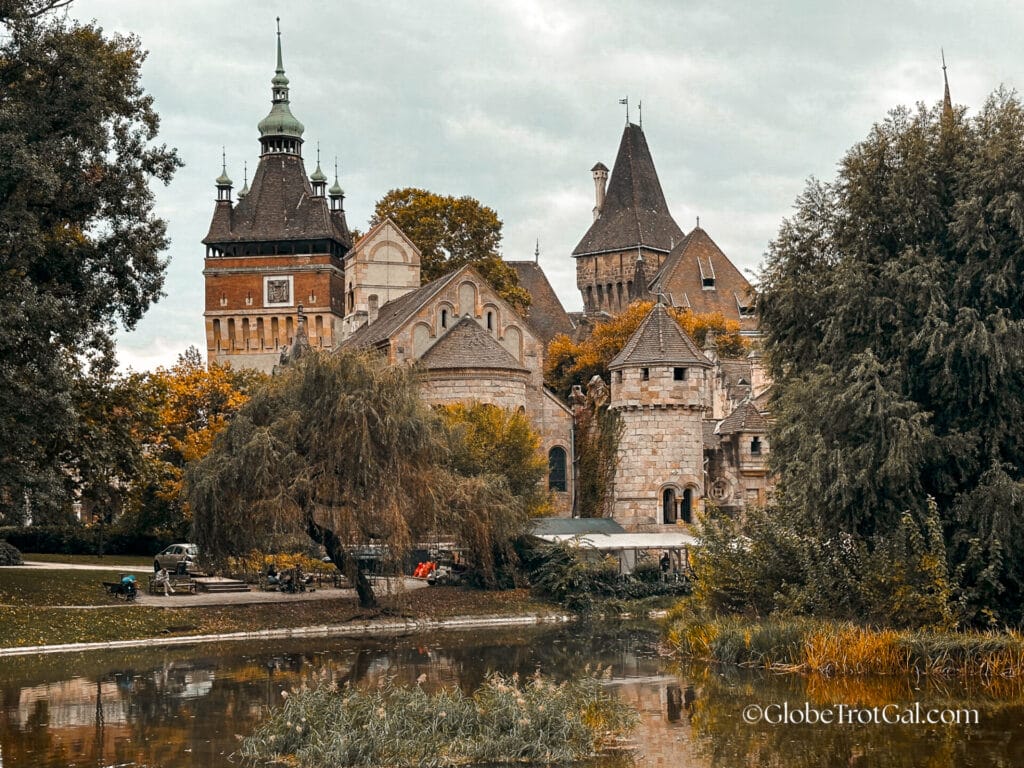
A short walk from Heroes’ Square, you’ll find Vajdahunyad Castle in the peaceful City Park. Originally constructed for Hungary’s 1,000th anniversary, this castle was built as a temporary exhibit—but locals loved it so much that it became a permanent feature. The design is a bit of an architectural mashup, combining Gothic, Renaissance, Baroque, and Romanesque elements, inspired by Hungary’s actual medieval castles. It’s a great spot for a quick break or a photo session before heading to your next stop.
Want to save this post for later?
Unwind at Széchenyi Thermal Baths
Next up, it’s time for a well-earned break at the Széchenyi Thermal Baths, which is just a short walk from Vajdahunyad Castle in City Park. If you’ve read anything about Budapest, you’ve probably already heard about two major highlights: the Parliament Building and the thermal baths. The baths are one of the most uniquely Budapest experiences you can have, so if you’re up for it and can fit it into your day, don’t miss it!
There are plenty of thermal bath options in the city, but Széchenyi is one of the largest, most famous, and one of the most beautiful with its grand Neo-Baroque architecture. And with its location right in City Park, it’s also conveniently close to other stops on this itinerary. Built in 1913, Széchenyi has a series of indoor and outdoor pools fed by natural hot springs, all rich in minerals that are said to have healing properties. Even if you only have an hour or two, that’s still enough to get a taste of the Hungarian bath experience.
Budapest Thermal Bath Pro Tips:
- Pack a swimsuit and flip flops. Both are required (flip flops only for walking around outside of the pools).
- Bring a towel (some hotels will let you borrow towels for thermal baths) or purchase one on site.
- You’re supposed to rinse off in the shower before getting in the baths.
- Purchase a ticket with a private cabin; it’s minimally more expensive than a locker and provides a private changing area and a large space to store your stuff.
- Purchase tickets for Széchenyi baths in advance through the official website here. There are other websites selling tickets, but they all have service fees.
Evening in Budapest: Sunset Views, Hungarian Comfort Food & Nighttime Vibes
Catch Sunset at St. Stephen’s Basilica (Optional; you’d probably have to skip the baths to fit this in)
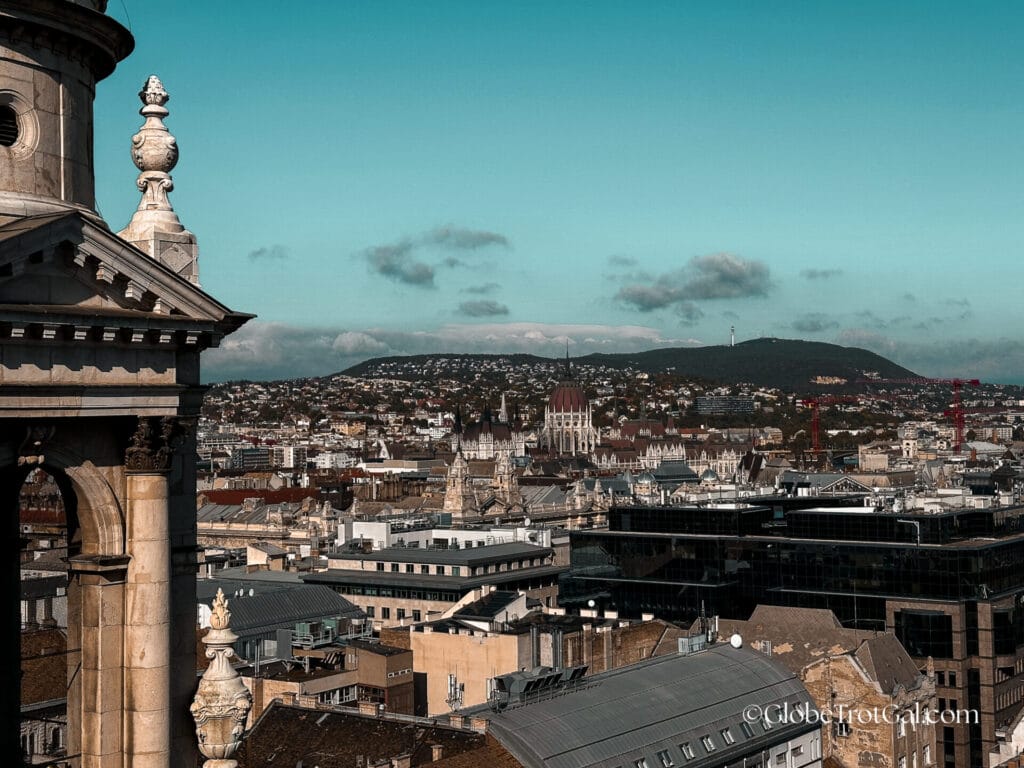
If you’re up for one more city view and have time, head to St. Stephen’s Basilica back in central Pest. This Neo-Classical church is named after Hungary’s first king, St. Stephen, and has panoramic 360-degree stunning views of Budapest from its dome. And, you can take an elevator up, though you’ll need to climb a few flights at the very top.
The dome closes around 5:45 pm, so this is optional based on timing and energy levels and the time of year you’re visiting—but on clear days, the 360-degree view is incredible. You’ll see the whole city stretching out, with the Danube glinting below and the hills of Buda in the distance. The entrance fee is around $5 USD, and it’s well worth it if you’re up for one last breathtaking view. You can purchase tickets at the ticket office on site, or through GetYourGuide, though if you purchase online you have to go get the ticket validated at the ticket office, so might as well buy on site.
Dinner: Hearty Hungarian Fare to End the Day
After all that exploring, it’s time for a well-deserved meal. Hungarian cuisine is famous for rich, comforting dishes, and no trip to Budapest would be complete without trying goulash—a hearty stew of beef, vegetables, and paprika that’s a national staple. Here are some top traditional goulash restaurants in Budapest:
- Paprika Vendéglő: Located just a short walk from Széchenyi Baths, Paprika is a cozy, local spot known for its authentic Hungarian flavors and famous goulash. They don’t take reservations, but it’s well worth the wait if you want a casual, welcoming vibe and traditional dishes.
- Rosenstein: For something a bit more upscale, Rosenstein is a beloved local favorite, serving up traditional Hungarian flavors with a creative twist. Reservations are recommended, as this is a popular spot.
- Gettó Gulyás: Known for its rustic atmosphere and fantastic goulash and paprikash, Gettó Gulyás serves up classic Hungarian comfort food in a laid-back setting. Reservations are definitely recommended here as well!
Nightcap Options: Danube River Cruise & Ruin Bars in the Jewish Quarter
To end your day on a high note, choose between a peaceful river cruise or a lively evening at one of Budapest’s famous ruin bars. Or, if you’re feeling ambitious, do both!

Option 1: Evening Danube River Cruise
For a perfect end to the day, head down to the riverfront for a Danube cruise. At night, the Parliament, Chain Bridge, and Buda Castle are all lit up, casting reflections across the water. It’s stunning.
Pro Tip: Book a boat with an open deck on top. I made the mistake of taking a nighttime cruise on a fully enclosed boat. While that setup would be fine during the day, it’s terrible at night—you end up seeing nothing but reflections and the occasional camera flash from someone on board. Learn from my mistake: go for the open deck for unobstructed views and photos that actually turn out, even if it’s a bit chilly out. Most cruises last about 60-80 minutes.
Here are a few good options you can book through GetYourGuide that have partially open deck boats, including one with unlimited prosecco if that floats your boat:
Option 2: Ruin Bars in the Jewish Quarter
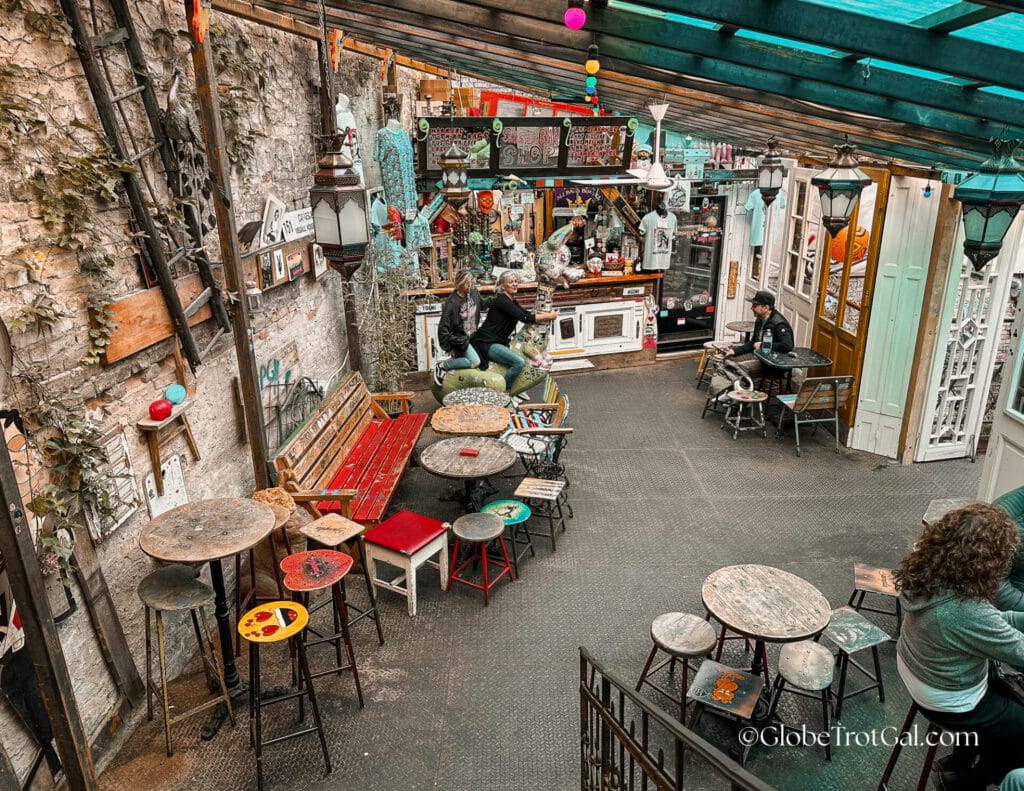
If you’re ready for a taste of Budapest’s nightlife, head to the Jewish Quarter and visit one of the city’s famous ruin bars. Szimpla Kert is the one you hear about the most—and for good reason. It’s like someone took all the great dive bars from NYC’s East Village in the ‘90s and mashed them together in a wild, sprawling collection of rooms. It’s quirky, artistic, and entirely unique, with mismatched furniture, funky decor, and random objects filling every corner. Szimpla is open till 4 AM, so if you have the energy, it’s well worth the visit.
If you want to try something local, order a shot of palinka. This Hungarian fruit brandy is, well, a bit like jet fuel, but it’s a classic! Cheers to Budapest!
Full of Energy? Do Both!
Want the best of both worlds? The river cruise usually lasts about an hour, leaving you plenty of time to head over to the Jewish Quarter for a nightcap at Szimpla Kert.
Wrapping Up Your Solo 24 Hours in Budapest
From sunrise at Fisherman’s Bastion to a twilight cruise on the Danube, you’ve covered Budapest’s highlights, history, and vibrant culture all in one unforgettable day. You’ll leave with incredible memories—and most likely an urge to come back and dive even deeper into this beautiful city.
One Day in Budapest: Frequently Asked Questions
1. Can you see Budapest in one day?
Yes, while you won’t cover everything, a well-planned itinerary can help you see Budapest’s highlights in one day. This itinerary includes iconic sites like Fisherman’s Bastion, the Chain Bridge, the Parliament Building, and an evening Danube cruise, giving you a well-rounded taste of Budapest’s architecture, history, and culture. But if you can extend your trip, 3+ days in Budapest is ideal to really get a feel for the city without being rushed.
2. What should I wear and bring for a day of sightseeing in Budapest?
For a busy day exploring Budapest, comfortable walking shoes are essential as there’s a good amount of walking involved. Dress in layers, as weather can change quickly, and bring a small day bag for any essentials.
If you plan to visit a thermal bath, don’t forget a swimsuit and flip-flops and towel, or check if your hotel can lend you a towel (they usually don’t want you taking the ones from the bathroom, but the hotel I stayed at would loan you one for the baths).
3. Is public transportation easy to use in Budapest?
Yes, Budapest has a very efficient and easy-to-use public transportation system. For this itinerary, you’ll likely take the bus, a few trams, and the metro. I’d highly recommend purchasing a paper 24-hour transit pass (about $7) from a ticket machine, which you can find in any metro station entrance, so you don’t have to worry about the quirky QR code ticket verification for electronic tickets or get a fine if your phone dies and you can’t access your ticket in the app.
You can also download the Budapest GO app (which is in English) to purchase and display passes. Just make sure you have a battery pack with you so your phone doesn’t die.
For more details, check out my post: The Complete Guide to Budapest Public Transportation for Visitors.
4. How much cash do I need for one day in Budapest?
If you’re just spending one day in Budapest, you probably won’t need cash. Budapest is very card-friendly, so while having some Hungarian Forints on hand is helpful, especially for small purchases, nearly all places accept credit cards. For entry fees, food, and transportation, around 15,000 HUF (~$40 USD) in cash should cover basics if you prefer not to rely solely on cards.
Pro Tip: Avoid Euronet ATMs at all costs (exorbitant fees and terrible exchange rates) and use an ATM at an actual bank to avoid any fees and get the best exchange rates.
5. Do I need to buy tickets in advance for anything on this itinerary?
Yes, it’s best to buy a few tickets in advance. Pre-purchasing tickets for Széchenyi Baths and the Danube cruise will save time and help you avoid lines and/or availability issues.
6. Is tipping expected in Budapest?
Yes, tipping is customary in Budapest. Plan to tip around 10-15% in restaurants and for good service, though most restaurants and cafés already include a service charge, so check your bill first. Since this is a super common travel question, especially for Americans visiting Europe, I have a detailed post about it here: A Guide to Tipping in Budapest: When, Where, And How Much.
7. Is it worth going to Budapest if I only have one day?
Absolutely. Budapest is a stunning city and if you have a chance to visit, even if only for one day, you should definitely do it.
8. Is Budapest Safe for Solo Travelers?
In short, yes. And I have a whole post dedicated to that here: Is Budapest Safe for Solo Travelers?
Questions or tips on visiting Budapest? Drop a comment below—I always love to exchange travel stories and hear your thoughts!
Top Budapest Hotel Deals & Must-Do Budapest Activities
Search hotels across Budapest, find the best-rated Budapest tours, and support this blog (at no extra cost to you)…all in one spot!